CASE STUDY
Geo-map layering platform
A smart geo-map layering analytics platform for real-time business visibility
Explore how we helped our partner evolve their product into a commercially viable business intelligence platform. From tackling critical performance issues to introducing scalable development practices, we worked under tight deadlines to prepare the product for high-stakes sales demos. Along the way, we supported its transition into a more stable, extensible, and market-ready tool for geo-intelligent analytics across logistics, property management, and franchise operations.
Foreword
Our partner turned to us during a critical transition point in their product’s lifecycle. The platform had a strong product vision but faced major technical obstacles that limited its ability to scale and deliver on that vision. Our role was to stabilize the codebase, improve performance, and help turn the platform into a commercially viable product. Beyond technical execution, this project gave us space to introduce structure, streamline collaboration, and support our partner in building a more resilient development process for long-term growth. This case study captures how we approached that challenge together.
Services provided
Web development, QA & software testing, Project management, DevOps services, UI/UX design
Team
1 Delivery manager, 1 Software architect, 2 QA engineers, 1 DevOps engineer, 4 Full-stack developers, 1 UI/UX designer
Cooperation model
Outsourcing
Duration
April 2025 — August 2025
Industry
Business intelligence, Supply chain
Country
Canada
Story
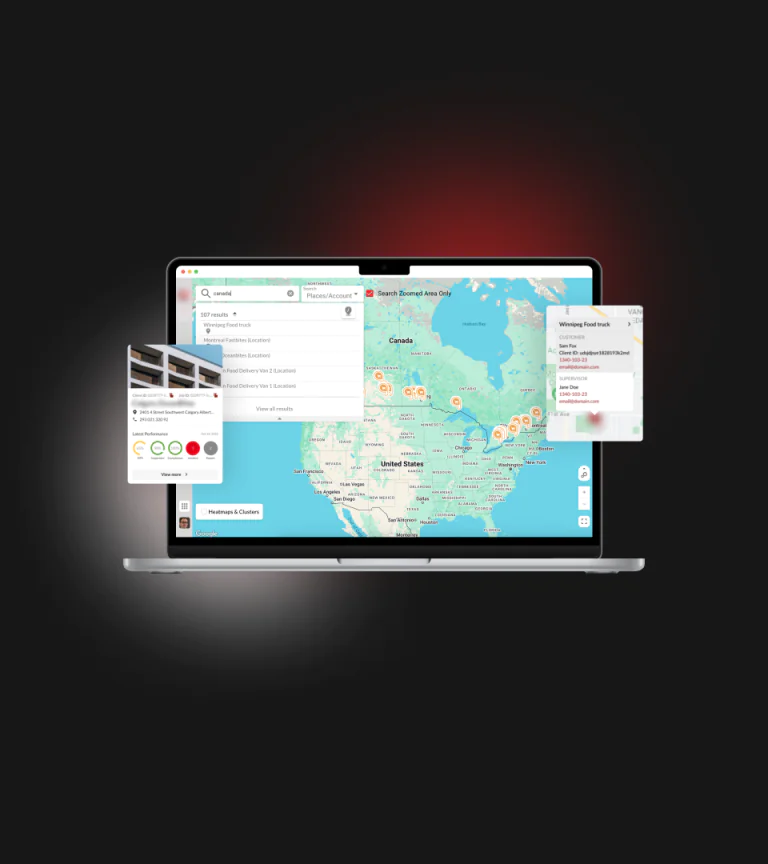
In early 2025, a Canadian company specializing in geo-intelligent business analytics, partnered with our team to stabilize and scale their business intelligence platform. The platform lets multi-location businesses visualize real-time operational data and asset management, including departments, products, customers, etc., at various branch locations in a map-based view.
They had a clear product vision and had already developed the platform’s core functionality, but its technical foundation held them back. Their in-house team struggled to resolve critical performance issues due to accumulated technical debt, gaps in system architecture expertise, and limited technical resources.
Our partner needed to transform the platform into a Commercially Viable Product (CVP) by the beginning of July, when a series of high-stakes sales demos were planned. With just a few months at our disposal, our team conducted a rapid assessment of the inherited codebase and planned a targeted approach to prioritize critical fixes. Our plan would address deep-rooted performance issues, fix critical bugs, and deliver essential improvements across backend, frontend and UI layers, all under tight deadlines.
After a two-week discovery phase that ran in parallel streams, we kicked off development. Our work covered data import functionality, map performance, permissions management, UX, testing, and regression plans, all while laying the foundation for scalable development moving forward.
AI-assisted acceleration
To support rapid progress, we applied our AI-assisted SDLC framework from day one, bringing structure, consistency, and speed to meet the deadline. AI-powered processes accelerated everything from effort estimation and test case generation to call analysis and task documentation, streamlining development while maintaining clarity and reliable quality under pressure.
The product is now well-positioned for growth in the business intelligence and geospatial analytics sectors. Businesses in logistics, security, property management, franchising, etc., use the platform to map and track progress, visualize and monitor their KPIs and branch performance live, and respond quickly to operational changes.
Requirements & Challenges
When our partner approached us, their team had already invested years into building their product. But despite their strong vision, the product needed refinement and stability before it could be confidently expanded.
The core challenge was speed under pressure: delivering visible improvements that would impress potential buyers, while also addressing underlying stability and scalability issues, so the platform could keep growing after the demos. This required careful prioritization, balancing quick wins like UX refinements with deep technical work on performance, data handling, and permissions.
We built trust with our partner’s team through transparency, clear delivery frameworks, and structured planning artifacts. This included estimation guidelines, risk logs and RACI matrices, which made key priorities, responsibilities and trade-offs visible from day one. Key requirements and challenges included:
- Stabilizing a partially refactored codebase: The platform had undergone multiple development stops and restarts, creating inconsistent architecture patterns across the frontend and backend. Some modules were legacy, with refactoring of others only partially complete, making it hard to maintain or expand functionality without stabilizing the system and fixing numerous bugs.
- Improving performance: Slow load times, unresponsive maps and excessive server calls during basic interactions resulted in delays, inconsistent map behavior and an unresponsive user experience. A critical goal was to improve performance across the board, especially in high-volume user flows.
- Refactoring permission logic without breaking the system: The platform's recursive permission model had grown overly complex, slowing requests and creating a fragile dependency chain. Reworking it required care as even small changes triggered regressions across seemingly unrelated features.
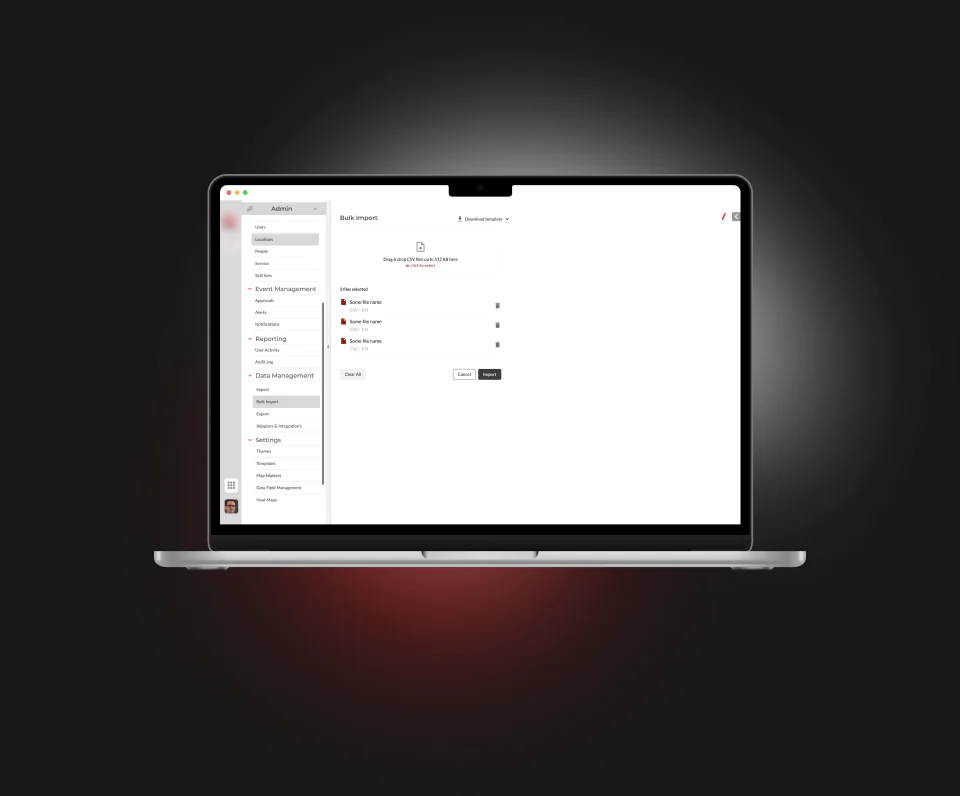
- Delivering new functionality within fixed timelines: While most of the focus was on the platform’s stabilization, our partner also needed new key features like bulk data import. Building and validating these additions in parallel with bug fixing required tight coordination and compromise.
- Clarifying and simplifying data infrastructure: Our team inherited a database snapshot with over 120 tables, many of which were outdated or unused. After an in-depth review, we identified ~80 active tables, which reduced confusion and focused development on the current business logic.
- Coordinating effectively under enterprise-style processes: Despite being a start-up-sized team, our partner expected enterprise-level discipline, including ISO-style documentation, risk logs, RACI matrices, and detailed metric tracking. We needed to adapt quickly, striking a balance between agility and structure to meet their high standards under a tight deadline.
- Balancing short-term delivery with long-term quality: Given a fast-approaching deadline, we needed to deliver improvements at speed without sacrificing stability. All changes had to withstand the test of time and continue delivering value well beyond the first demo.
Features
Bulk data import and validation
Features
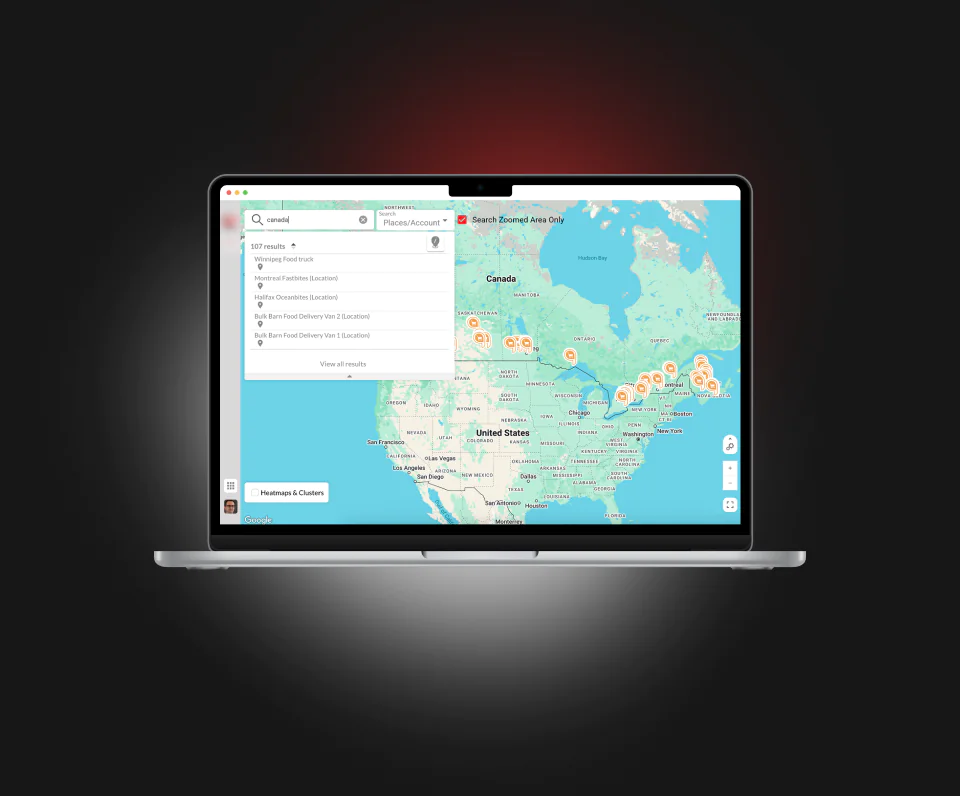
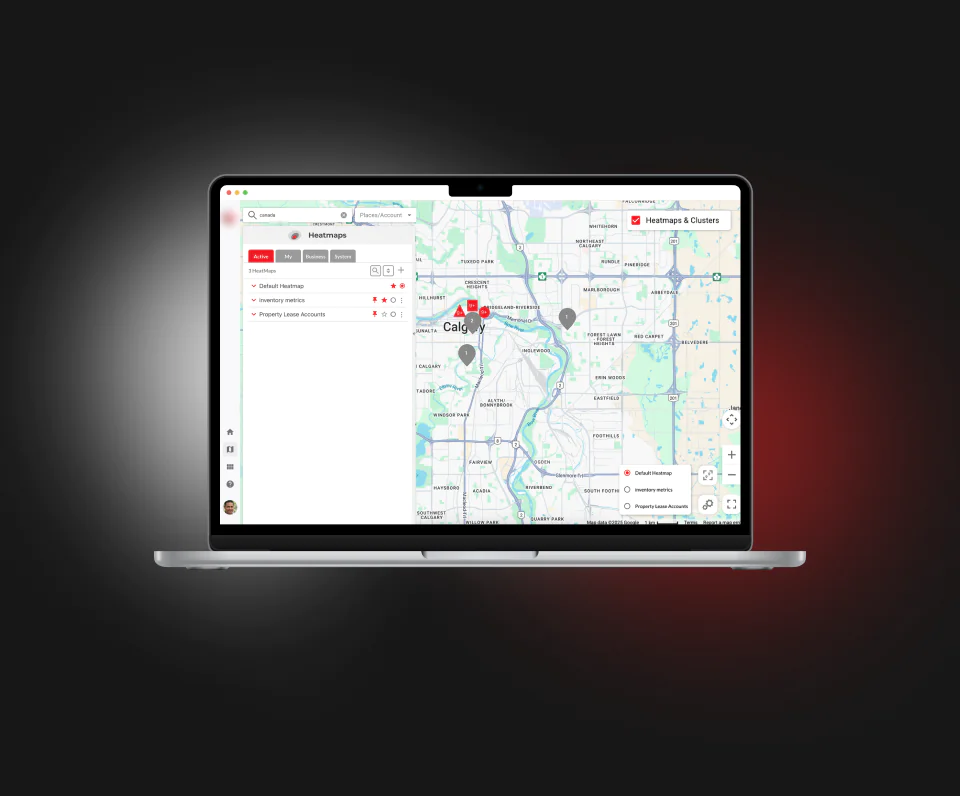
Map-based business data visualization
Features
Dynamic dashboards with location-level insights
Features
Heatmap overlays for activity tracking
Features
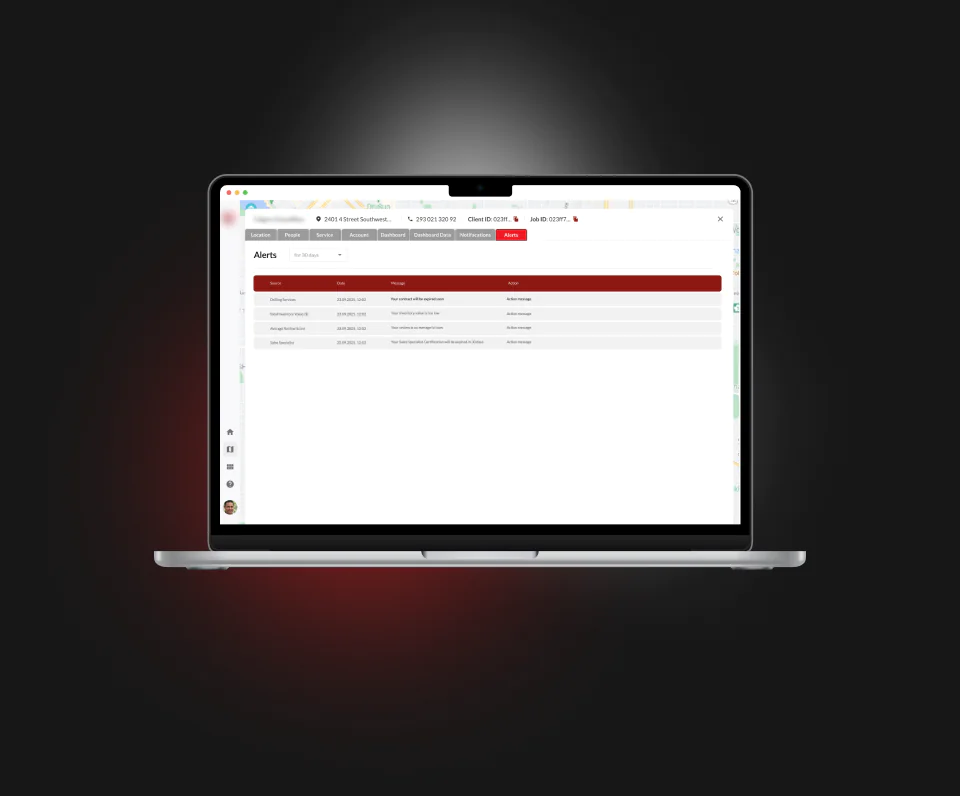
Alerts and notification system
Features
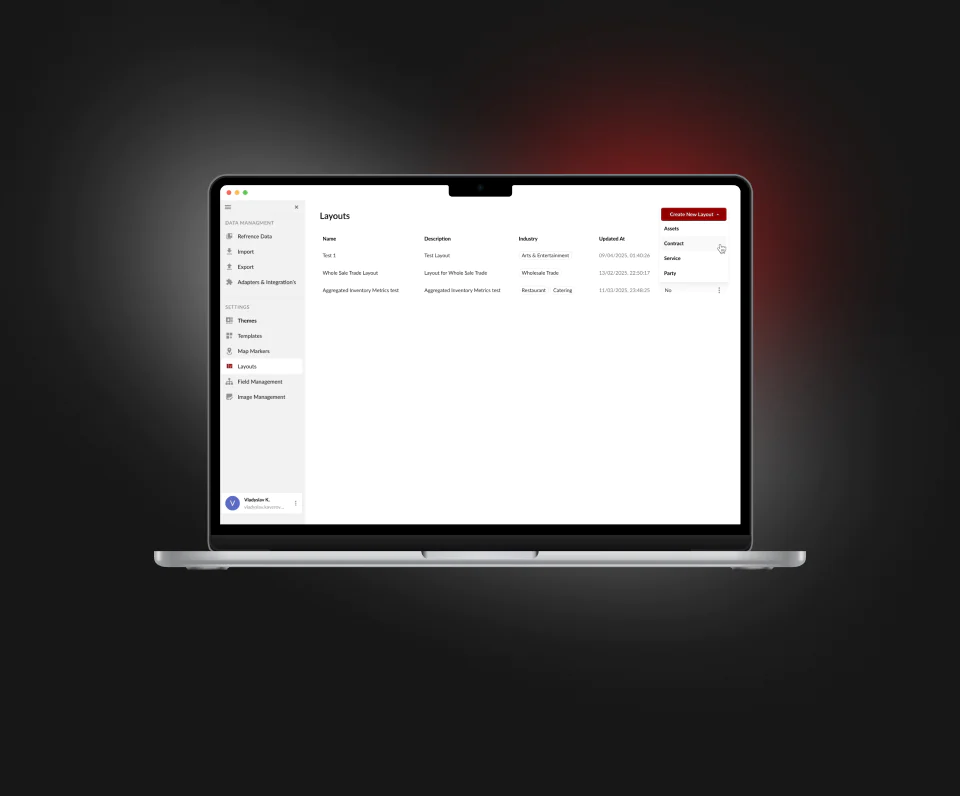
Admin panel for entity and group management
Stack
- - Platform
- - Frontend
- - Backend
- - QA tools
- - AI tools
- - Additional tools
Project outcomes
In just a few months of collaboration, we helped our partner turn their product into a stable, scalable product ready for commercial rollout. From performance boosts to process improvements, the outcomes below highlight how our work supported the platform’s transformation into a viable business intelligence solution:
-
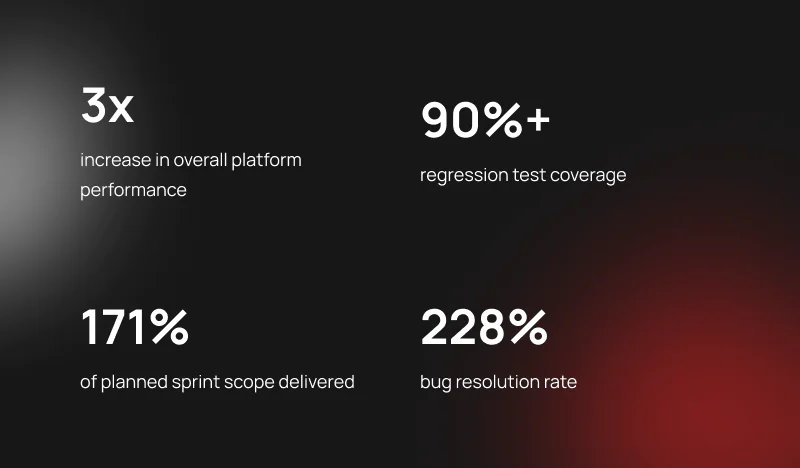
Stabilized and optimized Proximity for commercial rollout:We tripled platform responsiveness by fixing critical bugs, resolving bottlenecks, and improving backend caching and request handling, readying Proximity to handle increased traffic as the platform grows.
-
Added functionality for real-world scale and usability:To support enterprise client onboarding, we developed a bulk import feature from scratch. Users can upload structured ops data in large volumes, validate it automatically and categorize it by entity type, reducing manual effort and ensuring data integrity at scale.
-
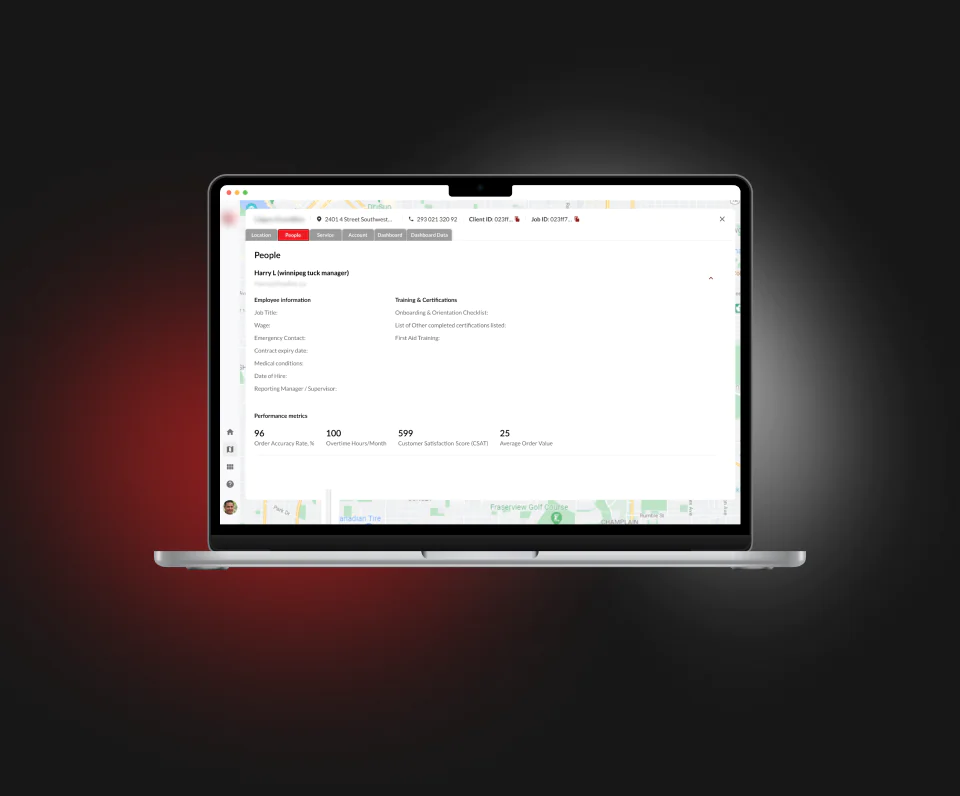
Improved the UX and visual clarity of map-based interactions:Users get a smoother, more intuitive experience with improved map scrolling and data rendering, and new dashboard features for detailed, location-based insights like rate of sales, customer satisfaction, and more.
-
Introduced structure, consistency and collaboration best practices:We introduced a shared development process to our partner's team using CI/CD pipelines, custom GitHub Copilot prompts and enforced code review workflows. All key coding standards are now documented, bringing clarity and consistency to the platform's fragmented codebase. This foundation reduces onboarding time, minimizes regressions, and enables faster, more predictable delivery across our partner's development teams.
-
Built a delivery-focused process that supports both speed and accountability:An AI-assisted SDLC framework establishes a structured and predictable workflow, with automated knowledge capture, ticket creation, code standardization, and KPI tracking supported by Notion AI and a GPT. The framework enables formal time and effort estimations, clear role distribution, and performance monitoring throughout development, improving accountability and delivery timelines.
-
Cemented strategic IT processes that support the platform's future success:Through our cooperation, our partner stabilized and improved their product in time for critical sales demos, meeting their 2-month deadline. With a more structured development process and a stronger technical foundation, their team is now equipped to expand services, deliver a more reliable experience to end users, and grow the platform faster while supporting increasing demand.
Let talk
The most impactful partnerships start from a first conversation – so let’s have one!
Contact us directly via
Visit our HQ in
Meet our representatives in
Hey Aimprosoft,
We’ve received your message and will get back to you shortly.