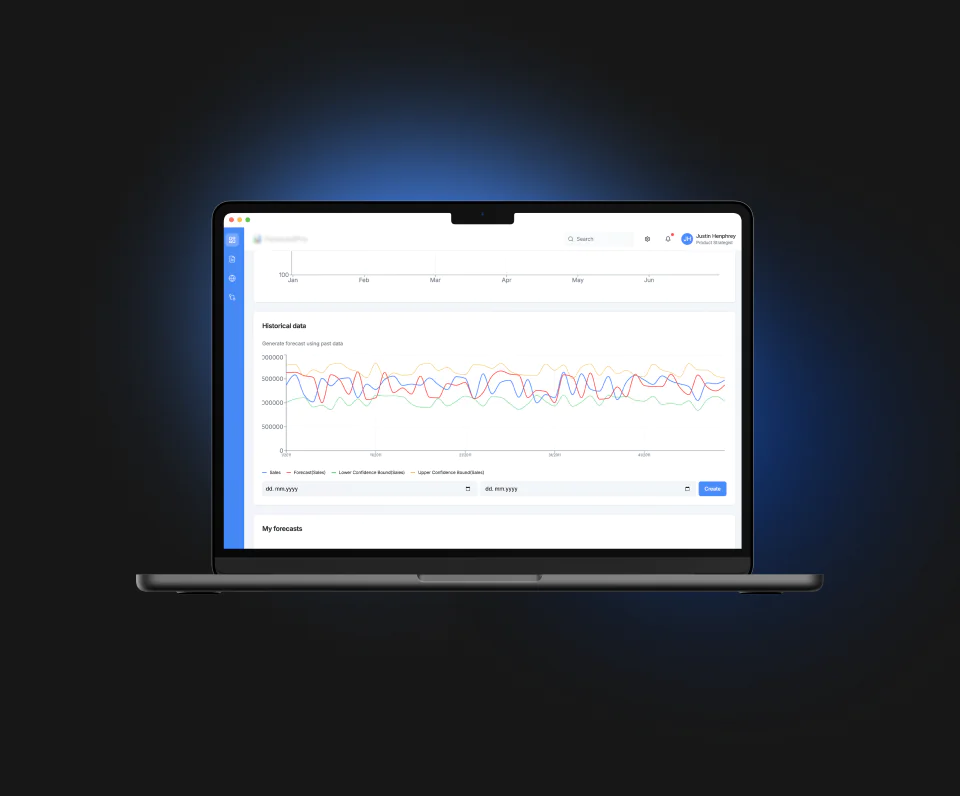
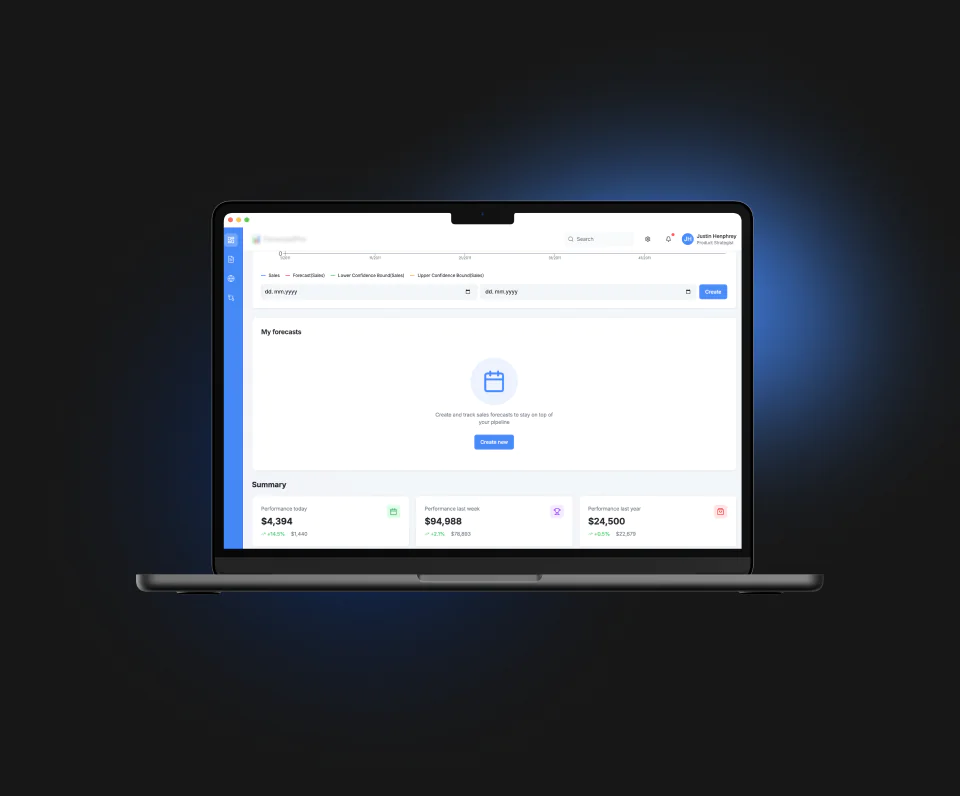
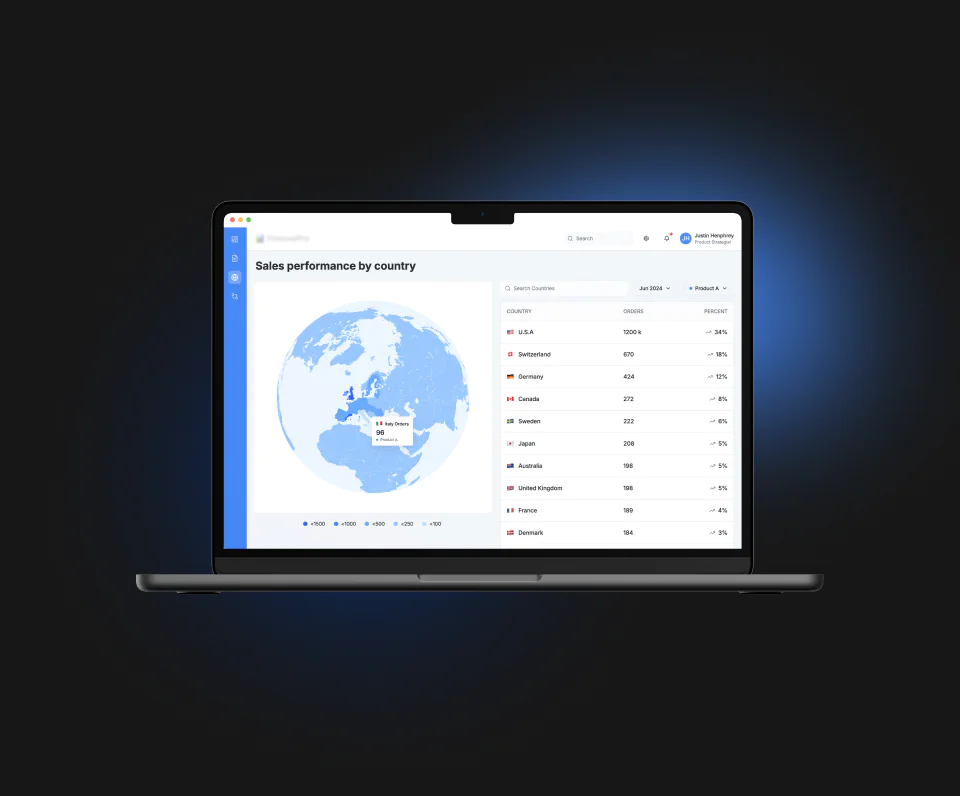
CASE STUDY
Web-based sales forecasting system
Unifying sales forecasting ops within a single web platform
See how a leading automotive manufacturer redefined its forecasting and planning capabilities with a scalable, connected digital ecosystem. What began as a system modernization effort evolved into a lasting partnership focused on enhancing visibility, data quality, and operational agility.
Foreword
With a mission to bring innovation and precision to every stage of the automotive value chain, our partner aimed to overcome limitations in its outdated forecasting system. Yet inconsistent data, manual updates, and fragmented tools slowed decision-making and reduced forecast accuracy. Together, we set out to build a unified, scalable platform that consolidates data from multiple systems, improves forecast reliability, and enables real-time analysis for strategic planning.
Services provided
Backend development / Frontend development
Team
Full-stack developers (2)
Industry
Automotive Manufacturing
Country
Europe (under NDA)
Story
A world-renowned automotive manufacturer approached us with a critical business challenge. Their global sales forecasting operations still relied on a decades-old mainframe console application with an outdated text interface. It was later supplemented by a standalone desktop UI for Excel imports and exports, but this created a fragmented workflow where analysts had to juggle multiple systems and files.
Their reliance on outdated tools created more than just frustration—it left gaps in security, produced data inconsistencies, and limited the forecasting precision needed for effective inventory management and market responsiveness.
Together with our partner, we set a goal: to build a centralized forecasting platform that would not only replace their legacy tools but also scale to support evolving sales planning needs in the years ahead.
Requirements & Challenges
Our partner needed to modernize their global sales forecasting infrastructure by rebuilding it on a modern tech stack. It wasn't their first attempt—previous efforts had made the scale of the rebuild clear. Leadership sought a collaborative approach that would combine their deep domain expertise with external technical capabilities.
But this enterprise-level rebuild involved more than just tech stack upgrades. The forecasting teams had long-established workflows and deep domain knowledge that couldn't simply be improved overnight.
Their sales planning operates on a three-tier hierarchy spanning Market Level (individual countries), Regional Level (continents), and Global Level consolidation. Each month, analysts across these levels pulled data from multiple systems and databases to create rolling 24-month forecasts.
We needed to consolidate these familiar yet fragmented workflows, replace a decades-old legacy system, build a foundation for future expansion—and maintain service for hundreds of analysts across global markets.
As both business scope and requirements evolved over the four years of our partnership, so did the technical challenges we needed to solve:
- Replacing their legacy system:Their forecasting software was a console-based application from the 1980s-90s that was impossible to maintain or update. Analysts had to switch between command-line interfaces and multiple Excel files to forecast sales. We would need to include all of this functionality in the new system.
- Enabling scalable forecasting: Forecasting was limited to 2-3 data points per market (model + model year), but our partner needed to expand forecasting to hundreds of data points, including detailed product attributes, like engine type and color. The new forecasting platform had to be built from the ground up to handle this level of complexity and future expansion.
- Improving data accuracy and consistency: Staff needed accurate sales planning to avoid leaving unsold cars sitting in lots, or customers waiting months for production. The forecasting system’s accuracy directly affects hundreds of millions of dollars in inventory costs and end customer satisfaction. Improving accuracy across thousands of data points would be a crucial yet complicated process.
- Automating forecast data consolidation Analysts were spending large portions of each month copying and merging forecasts across multiple Excel files. Automating tedious consolidation in a single web interface would free them to focus on strategic planning rather than repetitive tasks.
- Preparing for the future Their new platform needed to be built on a modern architecture that could support continuous growth without major system overhauls, and plans to eventually add AI features and more feature integrations.
Features
A multi-level sales forecasting workflow
Features
Role-based data access
Features
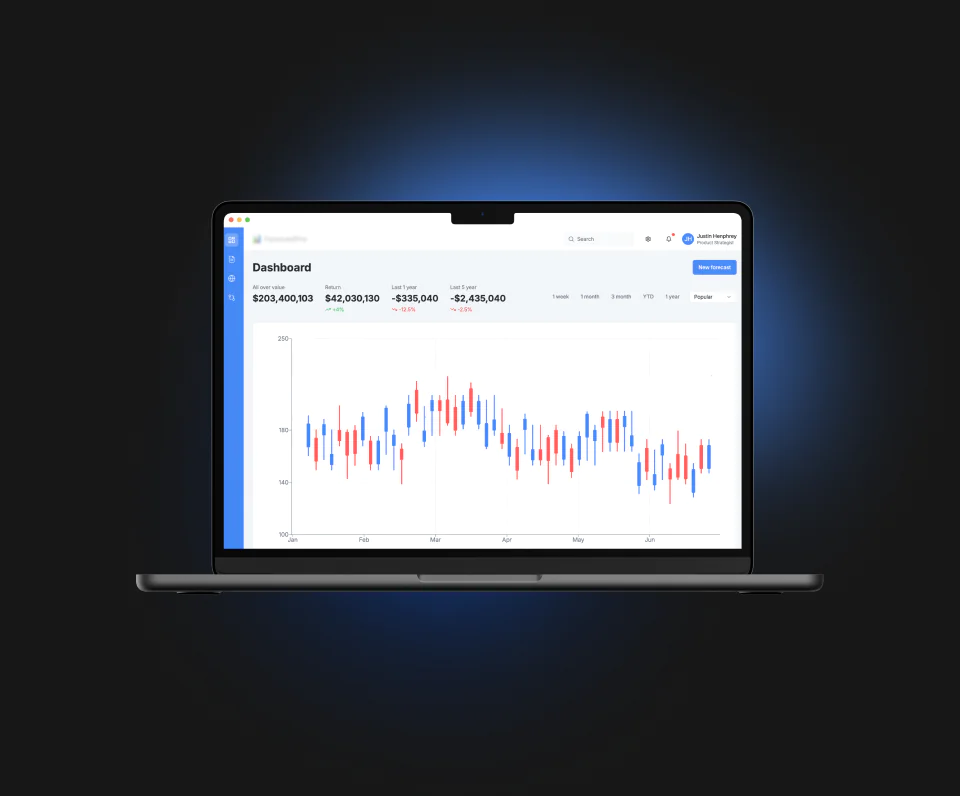
Historical data integration
Features
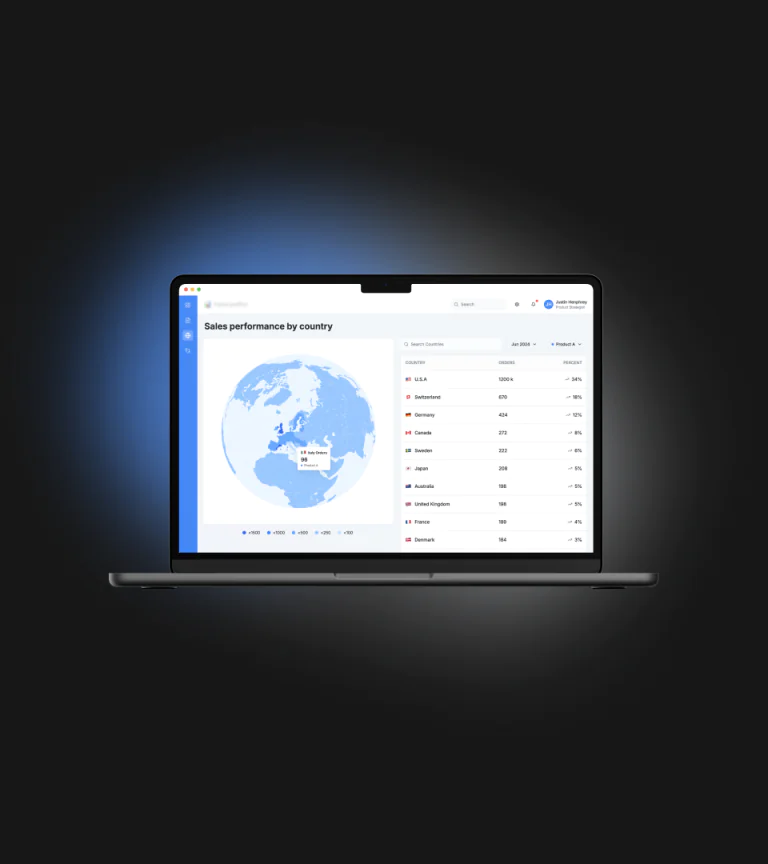
Excel-like interface for familiar workflows
Features
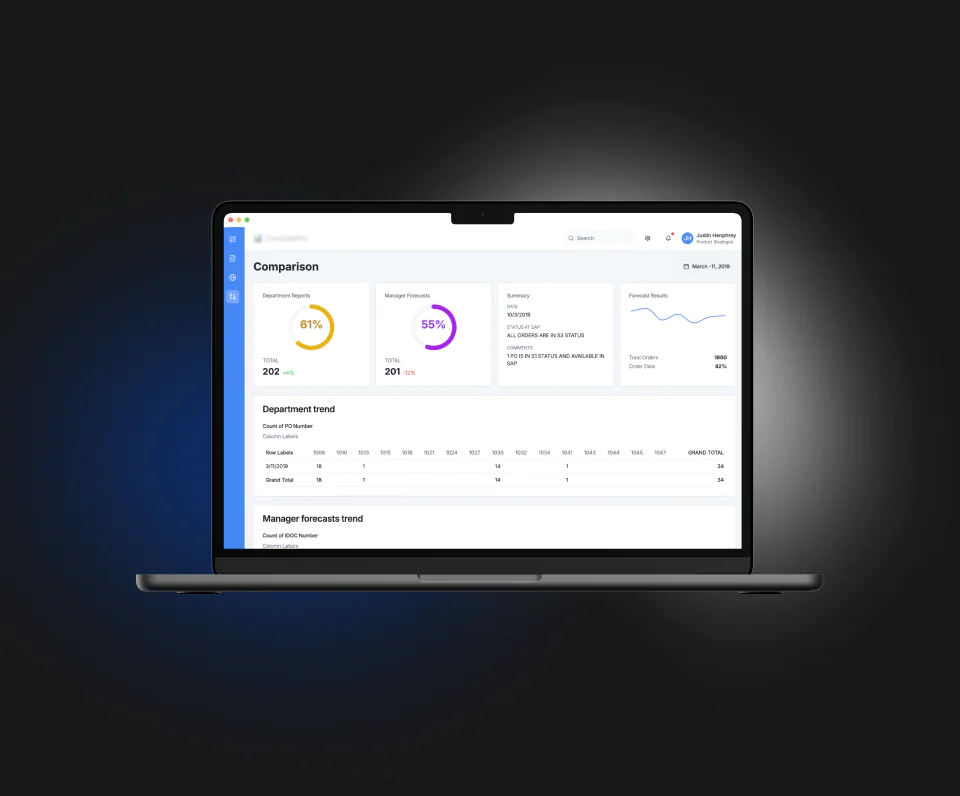
Automated data consolidation
Features
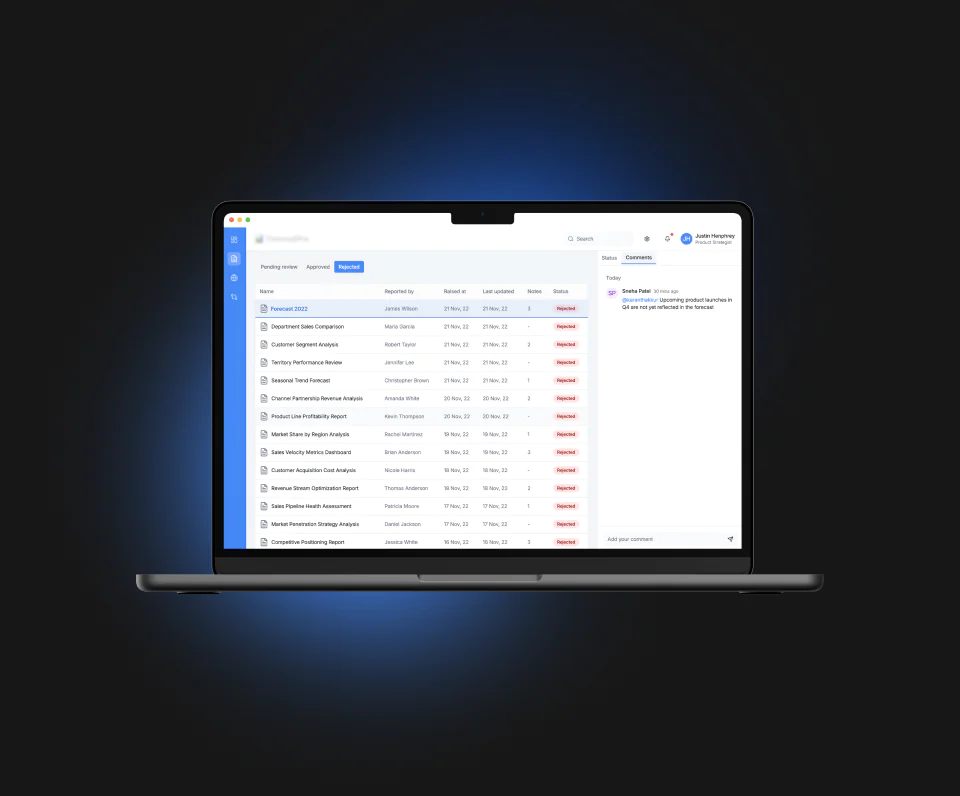
Review and rejection workflows
Stack
- - Frontend
- - Backend
- - DevOps
- - Other tools
Project outcomes
Working hand in hand with our partner, we built a resilient, future-ready platform that streamlines data management, collaboration, and decision-making. Key results include:
-
Solved enterprise integration complexity:The updated platform integrates with existing enterprise systems, uniting vehicle configuration data and historical sales records. This gives analysts a single source of accurate, up-to-date information for forecasting.
-
Built scalable microservices architecture:Based on our partner's growth projections and business requirements, we designed a scalable microservices architecture capable of supporting a 100x data volume increase. This lets market analysts expand the level of detail in forecasts without slowing down the monthly planning cycle.
-
Strengthened data securityPreviously, sensitive forecasts were scattered across various Excel files accessible to any analyst. We implemented a secure, centralized database with role-based access controls, ensuring users only see relevant data according to their level of responsibility. The platform operates within the corporate network, protecting confidential forecasting data until official publication.
-
Streamlined enterprise data processing:Automated data collection and the consolidation of processes handling hundreds of analysts’ inputs across time zones and offices worldwide. This removes delays in the monthly planning cycle and keeps data quality consistent, no matter how much data is inputted or where it comes from.
-
Created a future-ready foundation:By selecting a microservices stack with Spring Boot, Angular, PostgreSQL/MongoDB, and containerized deployment on Kubernetes, their platform will be able to support new feature add-ons and integrations without large-scale rebuilds. This adaptability gives our partner the flexibility to quickly integrate pioneering tools, for example new AI forecasting algorithms, as they’re released.
We’ve received your message and will get back to you shortly.